


When physics teacher Christopher McClain joined the science department in his first year, he was welcomed with open arms. Without hesitation, he was invited to join the teachers’ fantasy football league, and fast-forward to 2025, he is now the one running it. That open, inviting energy is what makes the science department stand out to both students and staff.
“[Being immediately invited is] probably my favorite part, everybody’s always accepted,” McClain said.
From fantasy football to weekly lunches, the science department has become a tight-knit group that supports each other and their students.
So, how did the science department become so close knit?
“Everyone kind of has similar interests.” said Melissa Scheldrup, chemistry teacher “I think people just bonded over that, over the years. And, you know, we all love science. We’re all a little quirky”
A love for science mixed with similar personalities led to friendships that fostered a wide range of activities.
McClain said that what ties everyone together is their love of science and shared energy.
“The teachers have the same underlying fun, energetic, creative and curious personalities that mesh well together,” McClain said. “That shared personality is what helps their activities stick and evolve over time.”
Scheldrup said that one of the most vital parts of what makes these friendships work is their willingness to try new things.

“We just try different things,” Scheldrup said. “Sometimes it catches hold. Not everyone’s in the fantasy football league. I don’t get fantasy football.”
Not every teacher joins the same activities, but there’s always something for everyone.
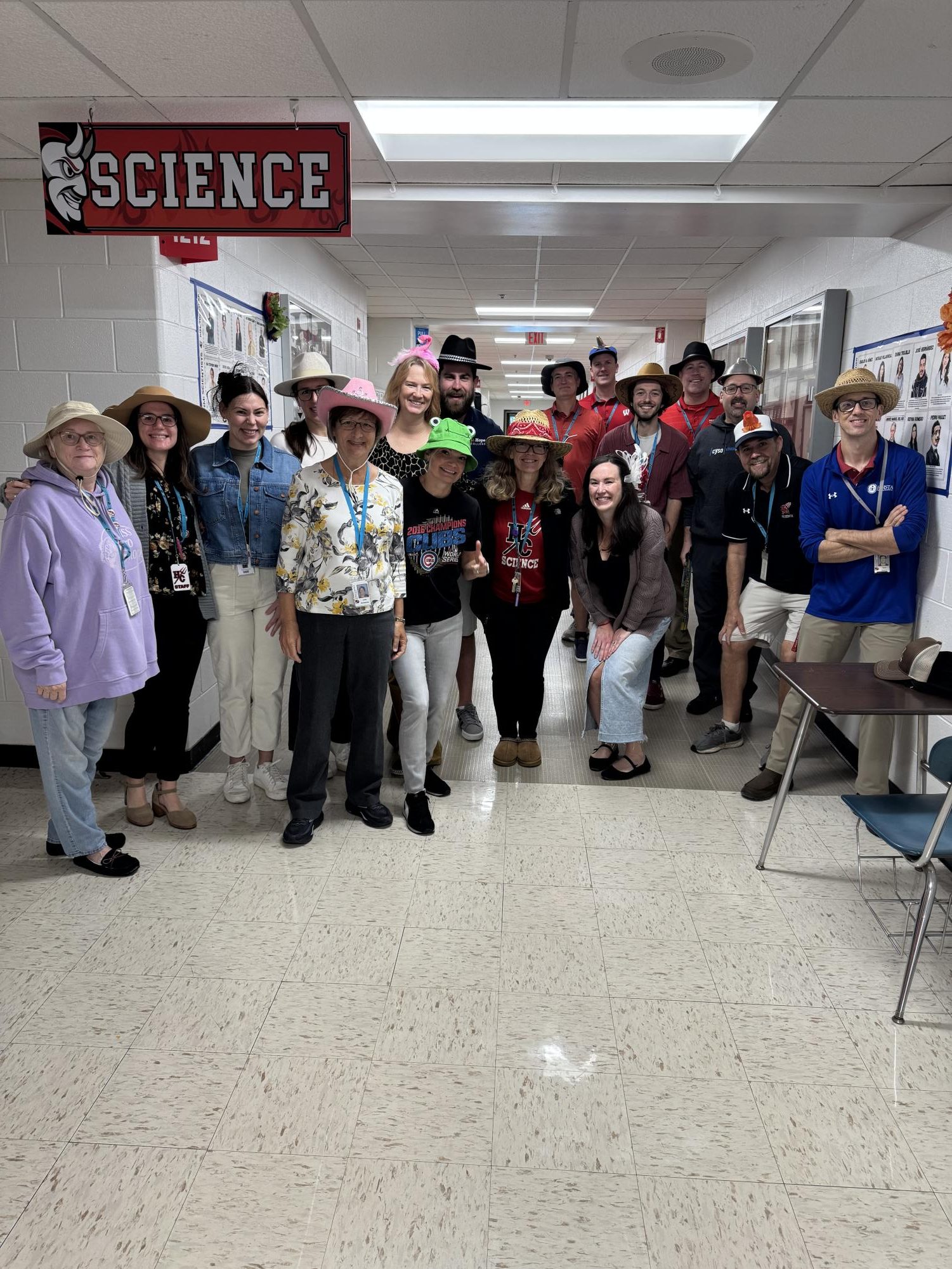
Although Scheldrup said she doesn’t participate in fantasy football, she does book clubs, goes to the lunches and dresses up with the whole department. This is just one example of how the department has activities that they all can enjoy.
Scheldrup said she doesn’t have a specific memory that embodies the fun vibes in the science department, but that all the jokes and laughs make the shared moments memorable.
“It’s not just one specific memory, it’s the silly things that happen that make it fun,” Scheldrup said. Those light hearted moments show up in times spent together.
The teachers aim to make science enjoyable and encourage curiosity, hoping to instill a love for learning for their students. One way that they do this is they all participate in the wacky Wednesday and dress up days.This year they were featured on the school’s Instagram page for their shark costumes. They have many fun dress up days like this; for example the whole department goes all out for Halloween. They even have a Frankenstein costume that has been passed down for over 20 years.
Students recognize the science teachers as a group. Whether they are spotted walking in the halls, or pulling pranks and joking with each other it is not a secret that they get along well.
“Mr. Pintz’s best friends are definitely in the science department,” said senior Sherine Nehme.
The science teachers said they hope that when students recognize them as a group they see that they are real people.
“We have relationships just like students have relationships,” said James Paige, biology teacher.
One of the ways that the science teachers’ closeness can benefit students’ learning is they can cover for other teachers if another teacher is busy.
“If you have a question about something and can’t find your teacher or they are busy, another teacher can help,” Nehme said.
The science teachers are often found in each other’s rooms whether they are just chatting or pulling pranks on one another.
“One day one of the teachers super glued a bunch of stuff on my desk, and another day I walked in, and all my chairs were missing.” Scheldrup said.
They work to make what is a stressful environment more fun for each other, and that benefits students academically and emotionally.
The science teachers are all so close because they share their love for science and for teaching. Being close friends allows them to share best practices on how to provide the most meaningful learning experiences for students. Teacher collaboration leads to better learning environments as proven in a study done by Science Directly, “The results revealed a significant positive indirect effect between high-quality teacher collaboration and student achievement.”
“You have so many people who want to be good at their job and care about it, and just to hear what other people have to say,” McClain said. “That’s super valuable.”
The love for teaching and wanting to become better is a value they hold.
“Like Mr. Loudis is really good at certain things, and Mr. Sheldrup is really good at other things,” McClain said. “And when you get all those people together, and you’re like, oh my gosh, if I stole some of his ideas and sold some of his ideas, then, like, I would be better at what I’m doing.”
The friendships in the science department serve as a reminder to their students that these are people too. Higher level science classes can often seem intimidating for students. Social cognitive theory states that individuals learn by observing others. This can be applied in the classroom. When teachers show students positive and healthy relationships, the students can learn from that. According to the American Psychological Association, research on improving teacher student relationships have shown that teachers are role models that students learn social behaviors and communication skills from.
“We’re not robots,” Paige said.
Seeing them as real people can help students to be able to ask questions and be curious.
“It’s important to feel comfortable asking questions or being part of the discussion, because it’s scary when you’re in front of your peers, right?” Scheldrup said.
The science teachers said they hope that their closeness can demonstrate to students that they are real people, they are approachable and open to new relationships.
“Science is hard, but having the teachers being all [so close] balances that stress,” Scheldrup said.
What started as a shared love for science and teaching has blossomed into a group of people who love spending time with each other. Not only does their bond create a fun workplace, but it influences how they teach and shows students that curiosity thrives in community.