

On a Wednesday afternoon in February, students filed out of class and into the cold, joining peers from Hinsdale South in a student-organized walkout over the humanitarian situation in Gaza and the presence of Immigration and Customs Enforcement officials in nearby cities and states. It wasn’t a school-sanctioned event, nor was it without consequences. However, junior Esha Patel, who organized the walkout, understood and accepted that.
“I felt that I was skipping class because I needed to demonstrate something that I believed in,” Patel said. “School is very important for your future, but so is standing up for what you believe in.”
Patel’s walkout is one example of a broader question students are navigating today: how, and where, do they engage with politics and current events? It is also part of a longer tradition. Student activism first emerged out of the civil rights movement, with teenagers holding desegregation campaigns and demonstrations across the country. Since then, students have continued organizing around various events, from the Vietnam War to school shootings across the country. Whether in a classroom or on the street, the ways students are politically engaged are widening.
Social studies teacher Christopher Wilbur tries to make current events a frequent topic in his classroom.
“Using current events in a government class helps kids understand the concepts better that they’re supposed to learn,” Wilbur said. “It allows you to take that knowledge and attach it to something tangible.”
He also said he views the practice as a civic responsibility.
“We live in a democracy,” Wilbur said. “For people to know what’s going on is important, and if I can help model that for kids, then I think I’m advancing the project of American democracy going forward.”
Research supports his approach. A four-year study published in The Political Classroom by researchers Diana Hess and Paula McAvoy from the University of Wisconsin-Madison and the North Carolina State University, respectively, found that students who regularly participated in structured political discussions were more likely to read the news, engage with opposing viewpoints and show interest in political activity as adults.
However, having those discussions isn’t always easy. Wilbur said he makes a conscious effort to avoid partisan bias and, by extension, uncomfortable discussions.
“My general approach is to try to show lots of different sources,” Wilbur said. “If I’m going to show a video clip of one side, I always try to match it with one of the other side. I try not to take stands in class. I’d rather hear what kids have to say.”
One complication is the rapidly changing environment teenagers source their media from. According to a 2024 Pew Research Center survey of more than 1,300 U.S. teenagers, nearly half said they are online almost constantly, with YouTube, TikTok and Instagram dominating daily use.
Wilbur said that shift is something he notices in class.
“Students exist in a different media ecosphere than I do,” Wilbur said. “There’ll be times in class where a kid will bring something up that I have no idea about, but is actually important.”
He said that there is value in having a large variety of sources.
“When I was growing up, there were three TV networks and the radio,” Wilbur said. “Everyone had the same information. Now we don’t, and that can make the conversation hard, but it can also be an opportunity to learn from other perspectives.”
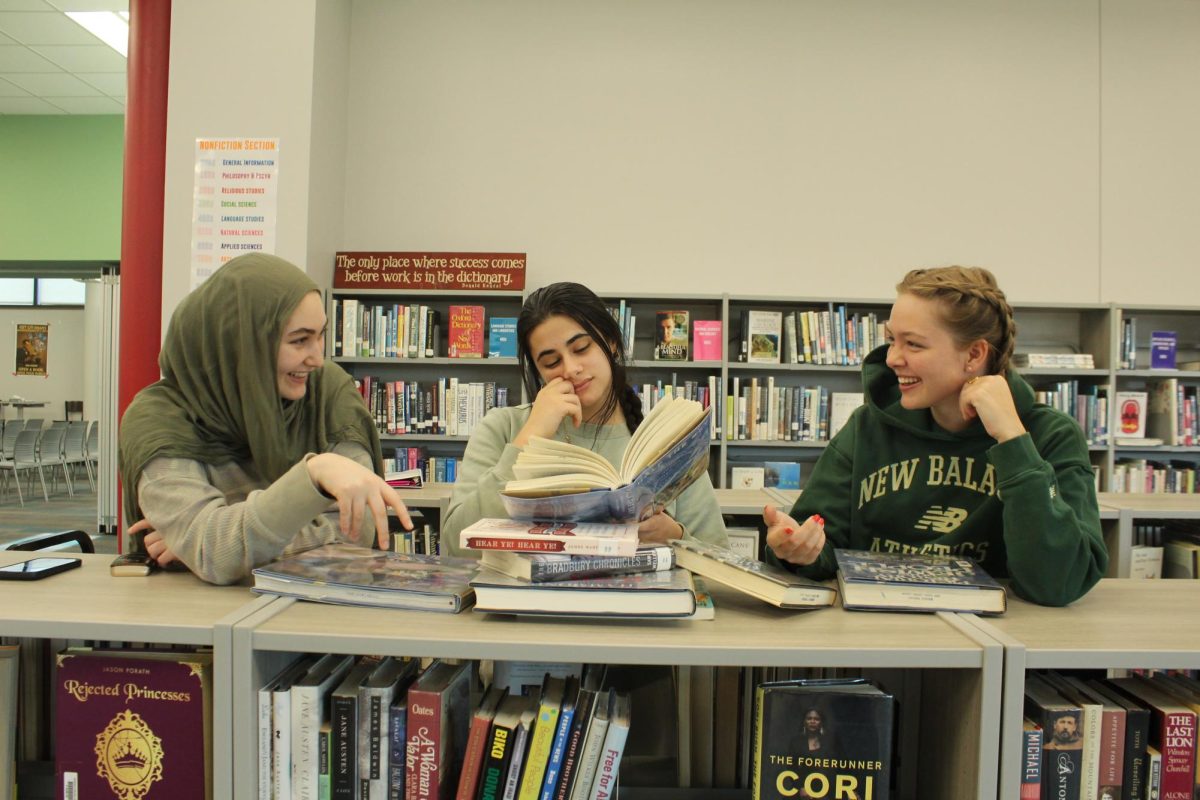
The Political and Cultural Science Club (PCSC) also allows students to share their viewpoints with weekly discussions on current events.
“The open-forum format is very informal and comfortable,” said Emma Leen, senior and PCSC co-president. “No one is discouraged from asking questions, discussing concerns or wanting to present their own topics.”
The Center for Information and Research on Civic Learning and Engagement (CIRCLE) at Tufts University has found that participating in extracurricular groups is among the experiences most reliably linked to positive civic outcomes for students. Discussing controversial issues and engaging with peers around current events are similarly predictive. However, for PCSC, Leen says the environment supports open discussion.
“Everyone in the club is genuinely interested in political discussion and understands that conflict is inevitable and not every topic is a fun one,” Leen said. “When the conversation hits an unideal place people are quick to resolve disagreements or just move on respectfully.”
Wilbur said he does not see being informed and being active as separate things.
“I think those two things go hand in hand,” Wilbur said. “The base level is you should be informed of what’s going on, but then I think you have to take some sort of action. That could be anything from voting or writing a letter all the way up to protests.”
For Patel, the walkout was about both the issues themselves and how other students view them. She said one of the organizers’ goals was to create a space where students felt comfortable expressing their views.
“A lot of times it’s hard to speak up about what you believe in politically, because there’s always going to be someone that has a different opinion than you,” Patel said.
She said students have a lot of power to push out what they believe and said she believes how protests can be effective..
“The goal was to break the bubble that can sometimes exist in suburban schools,” Patel said. “We wanted to force a conversation about these global and national issues in a space where they aren’t always discussed.”
According to post-election polling by CIRCLE, 66% of young people say they talk about politics with others, making conversation the single most common form of civic participation among youth, more common than voting, protesting or signing petitions. That suggests that simply starting a conversation is perhaps the most effective way to politically participate.
Wilbur said that, whether they choose activism or not, his advice to students is to keep a positive outlook no matter what.
“Stay informed and seek out avenues to advocate for what you think is good in democracy,” Wilbur said. “But that needs to be overlaid with at least some sense of optimism. Don’t get cynical or beaten down by whatever news you’re seeing. All is not lost.”