

In the English hallway, dozens of conversations can be heard amongst friends. “Wait, what happened in the reading last night? I didn’t do it and we have the reading quiz today.” Students read aloud Sparksnotes summaries to classmates, while others plug in a prompt to ChatGPT. In a class designed to capture the art of the English language in written format, students rarely actually read.
In the United States, reading levels for teenagers are reaching record lows. According to a study done by the National Center for Education Statistics, only 14% of 13-year-olds report that they read for pleasure every day, and that number continues to drop. Many researchers attribute this to a lower attention span as a result of social media. In past decades, students read an average of 20 books a year. In recent years, however, that average has dropped to 4, these studies found.
Many researchers, such as The Center for Adult Education, have found that reading has positive effects on development in all aspects of life. Due to the decline of reading for pleasure in newer generations, plenty of these organizations have concerns over the impact this lack may have on their well being.
“There’s so much more to compete with a person’s attention span when it comes to entertainment,” said Christopher Kostro, English teacher. “They would rather consume something shorter, like a 20 or 30 minute television episode.”
Studies have found this to be true. According to Nanyang Technological University, increased use of social media, especially social media that uses short form content, has a link to a decreased attention span in adolescents.
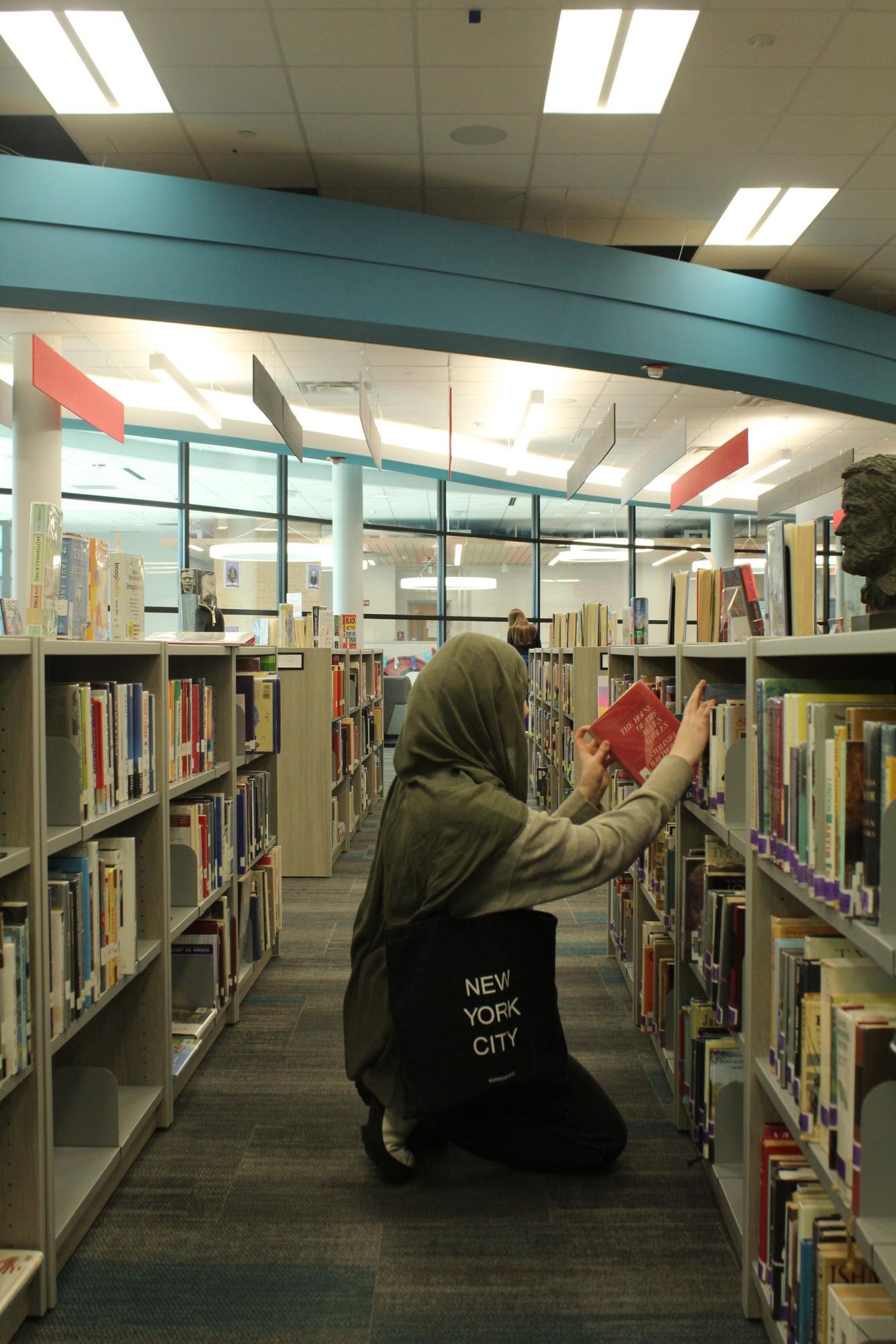
Many students have found this to be true as well.
“It’s so much easier and more visually appealing to watch a movie or TikTok because they have more stimulus.” Said Angel Perez, senior.
“Reading takes a concentrated effort,” Kostro said. “You have to sit down in order to comprehend and to enjoy, so I could definitely see that being a challenge for some students.In our sphere, we just have such fast entertainment. I could see that being a trap for young people.”
Kostro said he believes reading benefits students in many ways, especially in the academic sphere.
“If you look at students who read 20 minutes a day versus students who read five minutes a day, you’ll see a huge difference in their standardized test scores since reading is where you get your vocabulary acquisition,” Kostro said. “People who read a lot tend to have broader vocabularies, which helps you in many aspects of life.”
According to Kostro, a lot of students don’t realize how much small habits like those matter. Reading for just a few minutes a day may seem unnecessary, but over time it can really affect ways people learn and understand texts.
“I just think reading is a muscle,” Kostro said. “I think there is something special about being able to use that muscle and talk about the world through that literary lens that enriches a person’s life.”
While reading is often associated with schoolwork, it can also have a positive impact on mental and emotional regulation. According to psychologist Diana Tamir at the Princeton Social Neuroscience Lab, those who read more often tend to have better emotional and social cognitions than their non-reader counterparts. This means that readers are more in touch with their emotions and the emotions of people around them. They are also more successful in reading social cues, such as body language.
Sophia Klabacha, senior, said she believes reading makes people change for the better.
“When you’re reading, you’re hearing about other people and their experiences,” Klabacha said. “It makes you more empathetic as a person because you understand what other people might be going through or how they see the world.”
Reading often plays a key part in societies for these exact reasons, some students believe.
“I definitely think reading is important and we cannot lose that as a society. We should try and implement more reading in our daily lives.” Perez said.
Reading strengthens the ability to understand others on a wide scale which requires time to build and strengthen.
“You’re just better versed in different occupations and professions and all sorts of things that you might never experience for yourself,” Klabacha said.
It also opens people up to things they normally wouldn’t think about on a daily basis.
“There’s the pathos, the emotional sense of the story where there’s this sense of being human, of storytelling and trying to reach people,” Kostro said.
Thats what makes reading feel personal to some.
“I just really like looking at how other people think and interpret the world. And then that sort of inspires me and my own writing a bit,” Klabacha said.
According to Kostro, reading independently may also help high schoolers once they enter the next stage of their life and further their academic careers.
“One thing that students struggle with when they go to college is time management and sustaining the amount of reading that you have to do,” Kostro said. “One reason I like Book Love so much is that any reading helps overall reading.”
Book Love, created by Penny Kittle, founder of Book Love Foundation, a nonprofit that helps low income children receive books, is a technique meant to help students get more into reading. Teachers set aside ten minutes at the beginning of class for students to read any book independently before they come together and learn.
“If you can get a student hooked on reading anything, you’re going to increase that muscle I mentioned earlier for that fluency that you want,” Kostro said. “And the hope is that when you are in college and you are assigned chapter one in your textbook, you can sit through and read it.”
Students have found Book Love to be very helpful when it comes to reading for enjoyment. Klabacha notes that it gives students designated time in their schedule to read, even if it is for a relatively short period.
“I think the most important thing is giving people time, honestly,” Klabacha said. “I have a bunch of friends who are super clever and used to read, but they don’t have time anymore.If teachers could incorporate even more Book Love or something like that, it could be very beneficial.”
For other students, though, it can be difficult to get into reading.
For many students, reading isn’t something they actively avoid, but it also isn’t something they particularly reach for. “I wouldn’t say I enjoy reading, but when I have to do it for assignments or tests I don’t find it a problem. It’s just not my favorite thing to do,” said Judy Atassi, Senior. This kind of mindset has become more and more common year by year, as reading feels more like a chore than a choice.
Another common reason why students stop reading for enjoyment is because of the association with schoolwork, according to Klabacha.
“I think a lot of the times students start to get a negative association of reading because it gets assigned so much and students start to feel like ‘I have to fill out this packet, and I have to prepare for this reading quiz,’ and it becomes more like studying and less fun,” Klabacha said. “You stress out over things like discussions and papers and you get super in your head about it.”
Even students who enjoy reading are discouraged because of the homework they have related to it.
“Whenever I read, it feels more like homework than it does entertainment,” Perez said. “I think that if teachers helped guide students into books that they like, they will be more likely to read for fun in the future.”
Many teachers, such as Kostro, resonate with this idea.
“If you can get them reading anything, like The Da Vinci Code or The Hunger Games, I take it.” Kostro said. “While the more difficult the text, the more benefits you get, any reading is better than none at all.”
Both Klabacha and Kostro encourage students to pick up a book and start reading, even if they don’t know where to begin.
“Go to the library and find a book,” Klabacha said. “You don’t even really need to know what it’s about, just start reading it.”
Kostro believes that fostering a connection with literature is a core part of his work.
“I hope I am laying the seeds of loving reading,” Kostro said. “It really is one of the most beneficial things a person can do.”
Some recommendations from Klabacha and Kostro for those who want to start reading more include The Goldfinch by Donna Tartt, The Road by Cormac McCarthy, Poppy War by R.F. Kuang and Grendel by John Gardener.