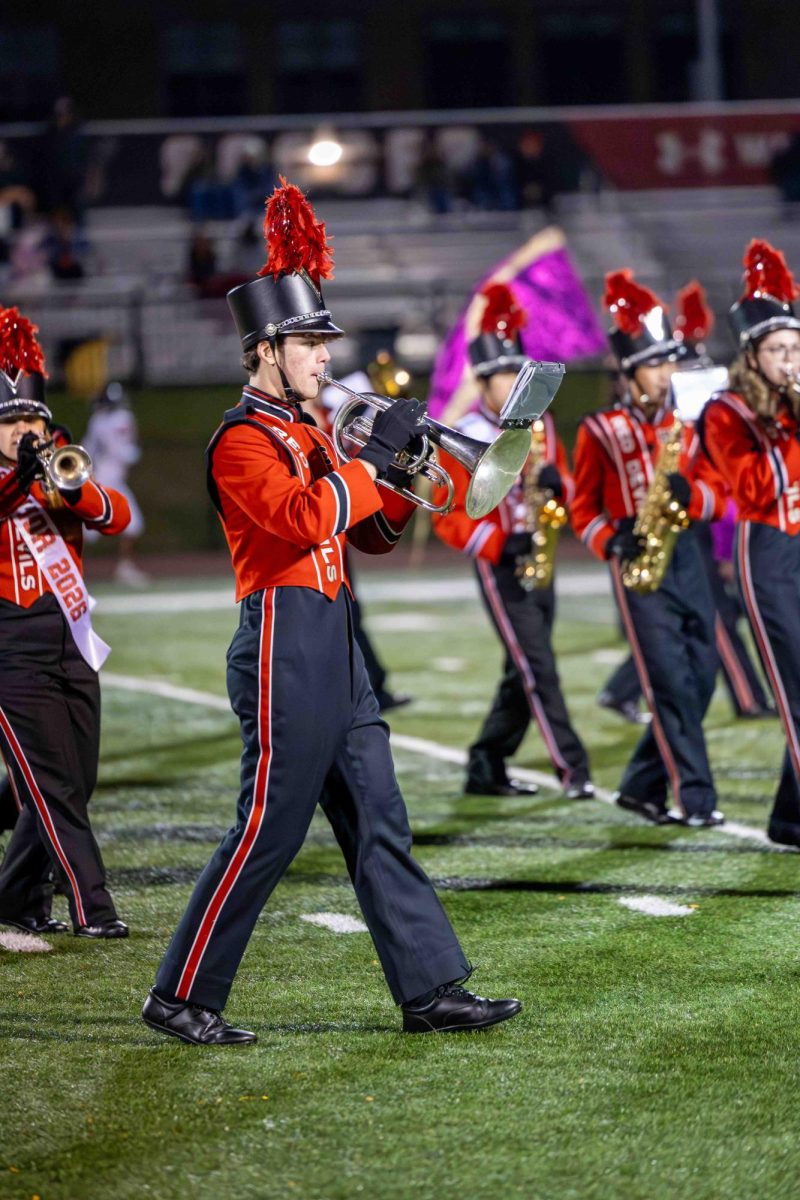


On Friday nights, Poms performs beneath stadium lights. The music echoes across the football field, the kick line slices cleanly through halftime and the crowd cheers in approval. It’s tradition. It’s what Poms has always done.
However, for the first time this winter, the team stepped off the sideline and onto a judged floor. Switching from the roaring crowds to the skeptical stares of the judges, the team traded screaming fans for silent score sheets. The shift marks the beginning of a new era for the program.
“For pretty much forever, Poms has just performed at football games, basketball games and pep rallies,” said Kim Fugman, coach of the Pom’s Competition team. “But over the years, schools around us have turned into more competitive programs.”
Last year, a handful of dancers expressed interest in competing. After conversations with the athletic director and surveying the team, there were finally enough girls willing to commit.
“We were interested in it last year,” said Riley Collins, a junior on the competition team. “All the other schools in our district did it, and we wanted to participate.”
Due to the new introduction of the team and the new time commitment, the team acted as an add on and girls on the team chose if they wanted to try out for it.
“Some of our older girls, like our juniors and seniors, made other commitments to other clubs and didn’t have the time,” Fugman said.
For senior captain Meg McMillin, the decision not to compete came down to balance.
“For me, it really was about the time commitment,” McMillin said. “I’m involved with a lot of other things at school, like the speech team and Women in Engineering. Since it’s senior year and I hold leadership positions, I wanted to still be able to partake in them.”
Competition season meant six to eight additional weeks of practices, including early mornings, separate rehearsals and performances beyond football and basketball games. For some dancers, the added intensity was exciting. For others, especially seniors navigating leadership roles and the college process, it required a choice.
“If I went into Poms knowing competition was there from the beginning, I probably would have done it my freshman or sophomore year,” McMillin said. “But senior year is different.”
The team still acted as a unit, according to McMillin. They stayed in the interconnected network of girls they have always been.
“We’re all still a very connected team,” McMillin said. “Regular Poms run completely normally. Competition Poms is kind of viewed as an extra add-on this year.”
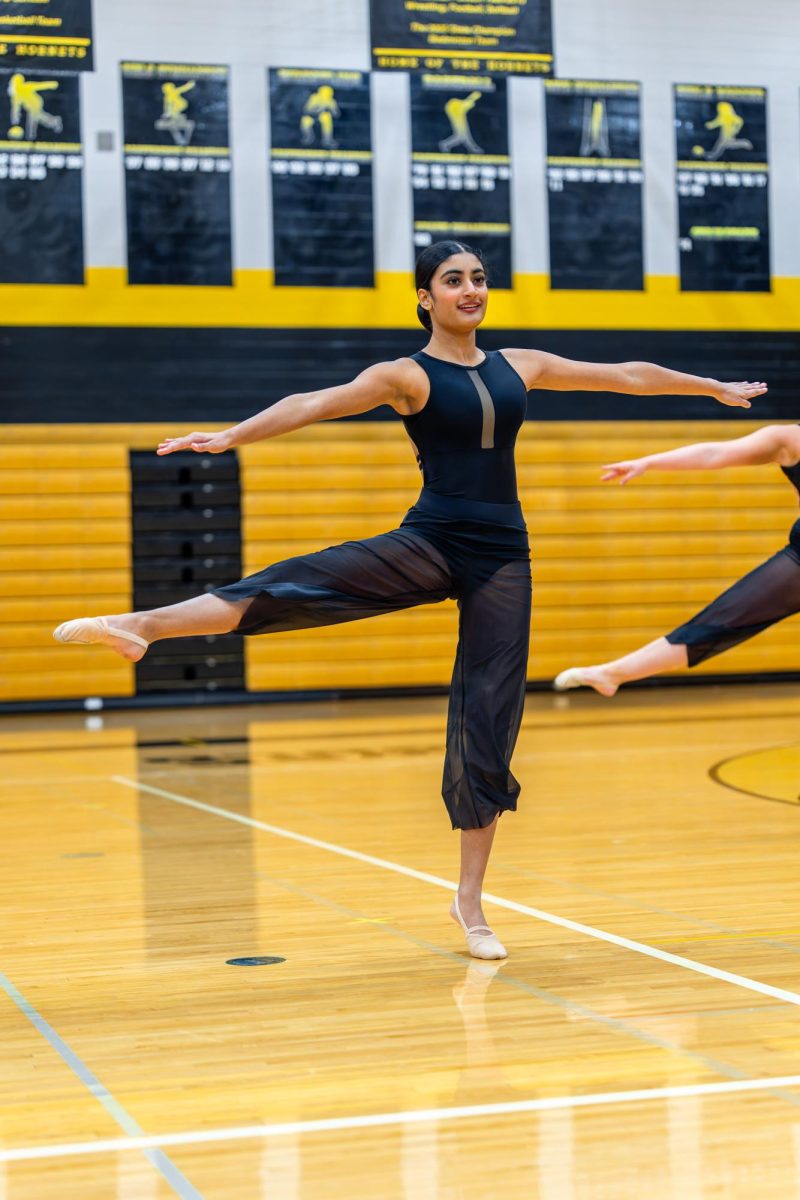
The competition squad practices separately and performs a routine entirely different from halftime.
“[We created] a competition routine — we don’t have a kick line,” Fugman said. “You can do jazz, pop or hip hop. Halftime is more of a medley of everything.”
Not only are the routines different, but the mentality from the field changes when they get on the competition floor.
“Halftime is more for fun and for school spirit,” said Anna Ursillo, junior competitor. “But when you get out on the competition floor, it’s really intense and there are nerves, because it’s actually scored.”
According to Ursillo, rallying a crowd has its challenges, but they differ greatly from feeling the pressure to compete.
“The vibe at competitions is way more intense,” Ursillo said. “There’s a lot of nerves, but it’s exciting.”
Beyond nerves, the dancers faced technical adjustments, spacing with only six members, learning rule differences and performing without the familiar setting of a football field or basketball court.
“The hardest part was understanding all the rules,” Collins said. “It’s really different from club competition — with shoes, spacing and staging. And since we only had six people, we had to work on the spacing.”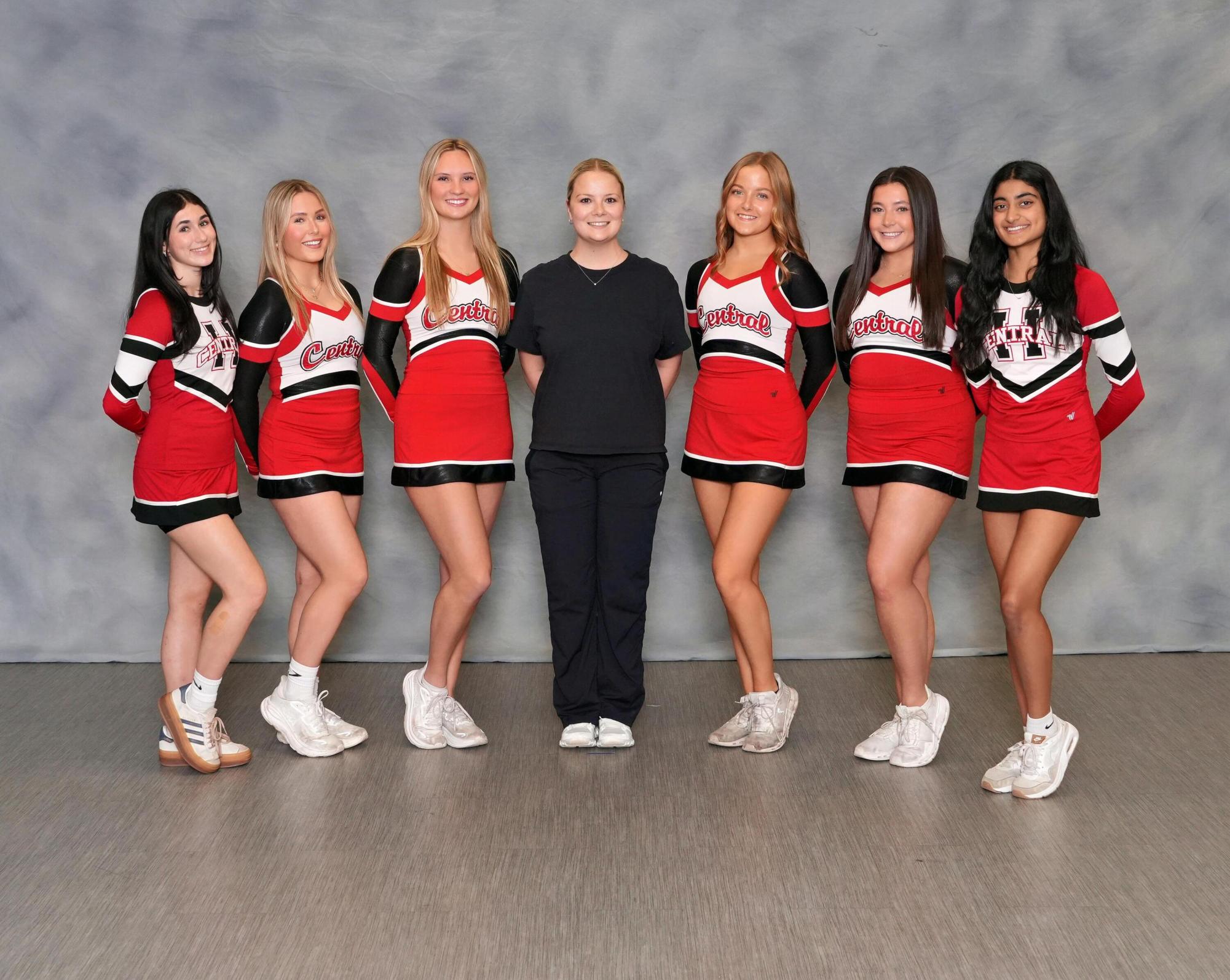
Still, the team embraced the challenge. The competitors said they had many opportunities for team bonding whether it was choosing costumes and makeup together, driving to competitions as a group or spending long mornings in rehearsal perfecting routines.
“It’s cool to be a part of the beginning of a legacy,” Ursillo said. “Even if it’s a lot of time, you’re part of something new.”
While competitors adjusted to score sheets and judges’ critiques, the rest of the team showed support.
“Our whole team went to watch them at some of their competitions,” McMillin said. “Some of our captains helped run everything. It isn’t too separate.”
Poms is more than just competitions and half time performances, according to McMillan, who discussed how much she has learned and how much she has enjoyed the four years she has spent.
“I really love Poms,” McMillin said. “It’s one of my favorite things I’m involved with.”
Over four years, McMillin has watched her role evolve. McMillin said freshman year meant learning choreography and finding her footing. Sophomore year she started to choreograph. Junior year she had more responsibilities. Now, as a senior captain, leadership is vital to her experience.
“Every year in Poms, you gain a new level,” McMillin said. “I really enjoy being able to lead our team.”
For competitors, the new program represents growth.
“I hope in five to ten years there’s a bigger turnout,” Collins said. “I hope we’re more successful and more of a threat to other schools.”
Fugman said this year is only the beginning.
“This year is a transition period,” Fugman said.
After years of sideline performances, Poms is expanding its identity. Some dancers are drawn to the scoring, structure and technical challenge of competition. Others find fulfillment in performing for classmates and balancing multiple passions.
“I hope future Pomers see that Poms can be what you want it to be,” McMillin said. “You can go all in on competition, especially if you want to dance in college. But it can also just be one of the many things you do.”
From the field to the floor, Poms are evolving. Whether under stadium lights or standing before judges, the foundation remains the same: a group of girls counting together, trusting each other and choosing their own path forward.