

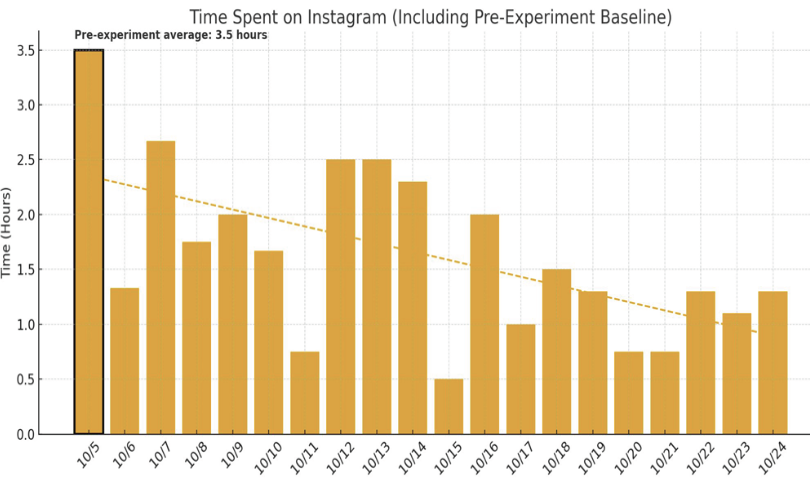
He reaches for the phone, swiping for the best dopamine hit the brain knows, only to remember the project Jim DiDomenico assigned: To make a change for 14 days and collect data on how it affects daily life. With Instagram locked until 8 p.m., the next best option is to finish homework or return to forgotten hobbies, small sources of happiness after stressful school days.
Instead of traditional research, this project required students to collect data on themselves. Each student created their own lifestyle change and committed and tracked it for 14 days
This interactive project was set up by English teacher Jim DiDomenico. This specific project is for his Advanced Placement (AP) English Language and Composition students. With the focus of the class on the text book “They Say I Say,” this project ties in what they learned about arguments in the book, ethos, pathos and logos, and their own lives.
The project had the students choose a lifestyle change that they thought would impact their life and commit to it for 14 days. Then, through the data they collected. They presented their findings to their class. Students chose their way of collecting data and their commitment.
Their evidence being personal created a more personalized project they could present to their peers. According to DiDomenico, as a result, overall engagement was higher than traditional assignments used in the past.
“This project seemed more fun for students,” DiDomenico said.
DiDomenico said he wanted to tie in how modern ‘hustle’ culture may affect students.
“We live in a culture now that is all about optimization, and I want to help the students be productive in that aspect,” DiDomenico said.
Based on student feedback, the project succeeded in doing so.
“It’s something you truly want to do,” said Anthony Barakat, junior. “It’s not something you’re assigned to do, You’re a lot more motivated to do the challenge.”
According to an article by Forbes, students’ learning increases when they draw on skills learned through academic research. This challenge in DiDomenico’s class not only made students change their lifestyles, it changed those lifestyles for the better. It taught them lessons in commitment and classroom engagement, according to participants.
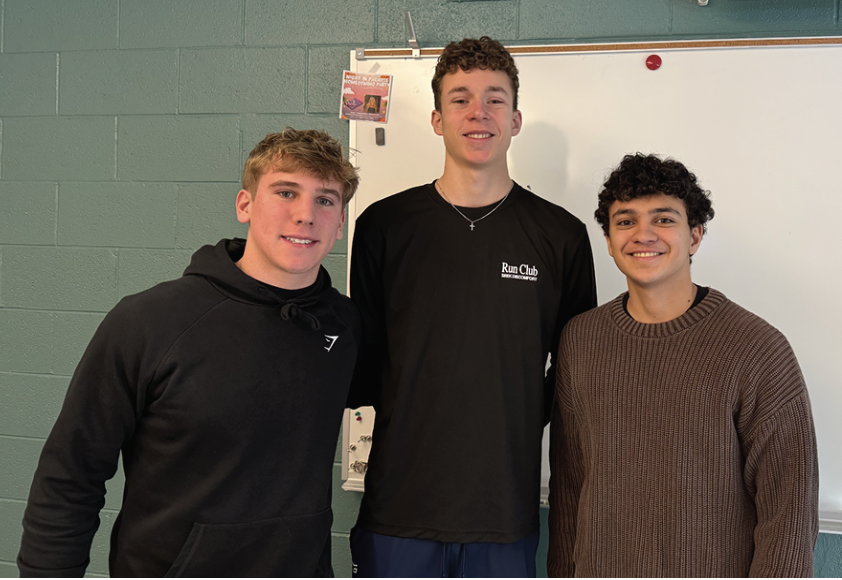
DiDomenico structured the project so that each class voted on the student who presented the strongest data and most convincing argument. One winner was Ian Maxwell, junior, who did his study on sleep. He went to bed at the same time every night and woke up at the same time to see what would improve.
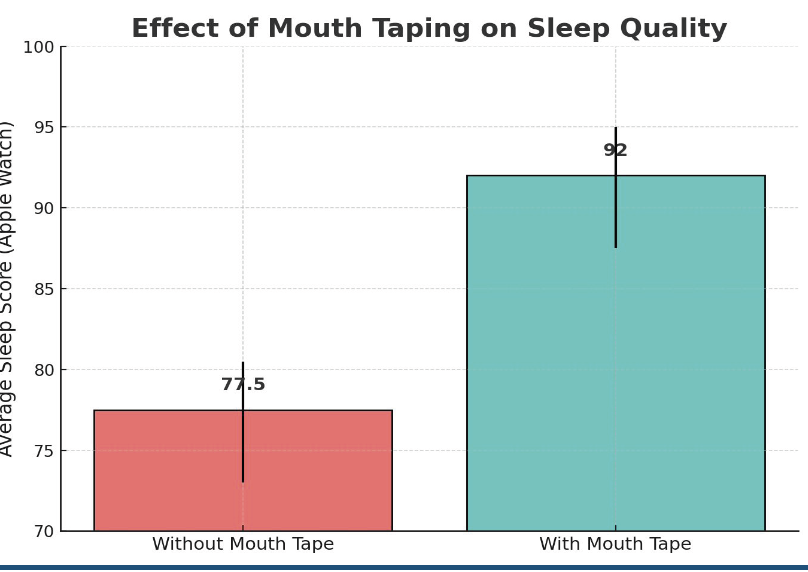
Another was Grant Mansell, junior, who studied the effects of mouth tape on sleep.
Lastly, Anthony Barakat, junior, set restrictions on Instagram to become more productive throughout the day.
The evidence that students collected caused them to be more proud and confident in their presentations, according to the winners. Each winner said that they had very few worries going into presenting the project.
“My evidence was pretty clear,” Mansell said. “I would try to get to bed as close as possible to 10 p.m. every night, since I wake up at 7 a.m., and I wanted to reach my goal of nine hours of sleep.”
Presenting to their peers at the end of the 14 day process served as a good motivator to keep students going in their data collection.
The motivation didn’t end with the presentation. Maxwell explained how the motivation was able to help him maintain his sleep schedule.
“I’m always trying to get as much sleep as possible, and with the project I couldn’t use excuses to not,” Maxwell said.
The project has done more than just give him a consistent sleep schedule for the two weeks. He says he still implements going to bed as close to 10 p.m. as he can, just like Mansell who still does his lifestyle shift.
Mansell’s lifestyle shift was to wear mouth tape every night and stick to a sleep schedule.
“I still use it every weeknight,” Mansell said, adding that the benefits of night-tape were not as surprising as the way that he kept to the schedule of the change.
“Every once in a while, on the weekends, I didn’t really want to do it,” Mansell said.
Still, Mansell said he stuck to it, and despite the conflicting views on social media about mouth tape, he said he really does think that it can be beneficial to one’s sleep.
Barakat’s study was applicable to many of his classmates. He focused on reducing his screen time. Since students live in a generation of social media addiction, he said he knew his peers would relate to his commitment.
“More than 90% of teens say they’re on their phone a lot less than they are,” Barakat said.
He said that even if students wouldn’t admit it, there’s a high chance that they were grappling with a phone addiction affecting productivity.
Because of the time he spent on his phone decreasing, Barakat said he was able to put more effort into more productive hobbies.
“Those hobbies were things I’d liked to do previously, but I just didn’t have time to like to do as much,” Barakat said.
Barakat said he was able to recognize that social media was taking up time that he should have been spending doing things he enjoyed because of the experiment.
If you take DiDomenico’s challenge and extend it to three weeks, many self help specialists say this will make it become a habit. Additionally, according to an article by Abbott, it can take 21 days to make a habit.
Barakat, Mansell and Maxwell all follow similar rules to their challenge post-assignment in order to feel their best. They all recognized the impact it had on their health and productivity, and they have been able to stay mindful about how to feel their best; whether they decrease their screen time or they focus on their sleep, they all said they found benefits from their projects.
Another important factor that DiDomenico used was accountability. DiDomenico said because his students had to present to their peers at the end of their studies, they stuck to it. According to a Synergy and Sports therapy article, accountability leads to strong habit forming due to external motivation.
Another benefit to this project that the students saw was the inspiration from other peers. Maxwell highlighted another student whose project inspired him to make another change.
“[A classmate] read scripture every morning and I thought it was something I should try to be more connected to myself,” Maxwell said.
The goal for this lifestyle switch project was to show students how to use personal evidence in arguments.
“They can see how arguments are more convincing when there’s personal buy in and that school doesn’t have to always be detached from your personal life,” DiDomenico said.
These three students highlighted tying in their personal life to school, sticking to their goals and being recognized for their presentations.
“I think [if you want to change something in your life],try it a few nights and see how it feels,” Mansell said. “Then, if you like it, you commit to it.”